The Tempest


- author
- William Shakespeare
- translated by
- Stanisław Barańczak
- directed by
- Paweł Paszta
- set and costumes
- Aleksandra Szempruch
- music
- Tomasz Jakub Opałka
- choreography
- Natalia Iwaniec
- stage manager, prompter
- Waldemar Sadowski
- director's assistants
- Mikołaj Kwiatkowski, Lada Borovska
- poster
- Joanna Sapkowska
- the cast
- Prospero - Jan Mierzyński
- Ariel - Marta Przybylska
- Miranda - Tina Popko
- Ferdynand - Maciej Kotlarz
- Kaliban - Marzena Wieczorek
- Stefano - Joanna Ginda-Lenart
- Trinkulo - Maria Błęka
- Antonio - Dominik Jakubczak
- Sebastian - Mieszko Wierciński
- Alonzo - Artur Nełkowski
- Gonzalo - Mikołaj Kwiatkowski
- Boatswain - Beata Chorążykiewicz
A play in which the audience moves around during the performance
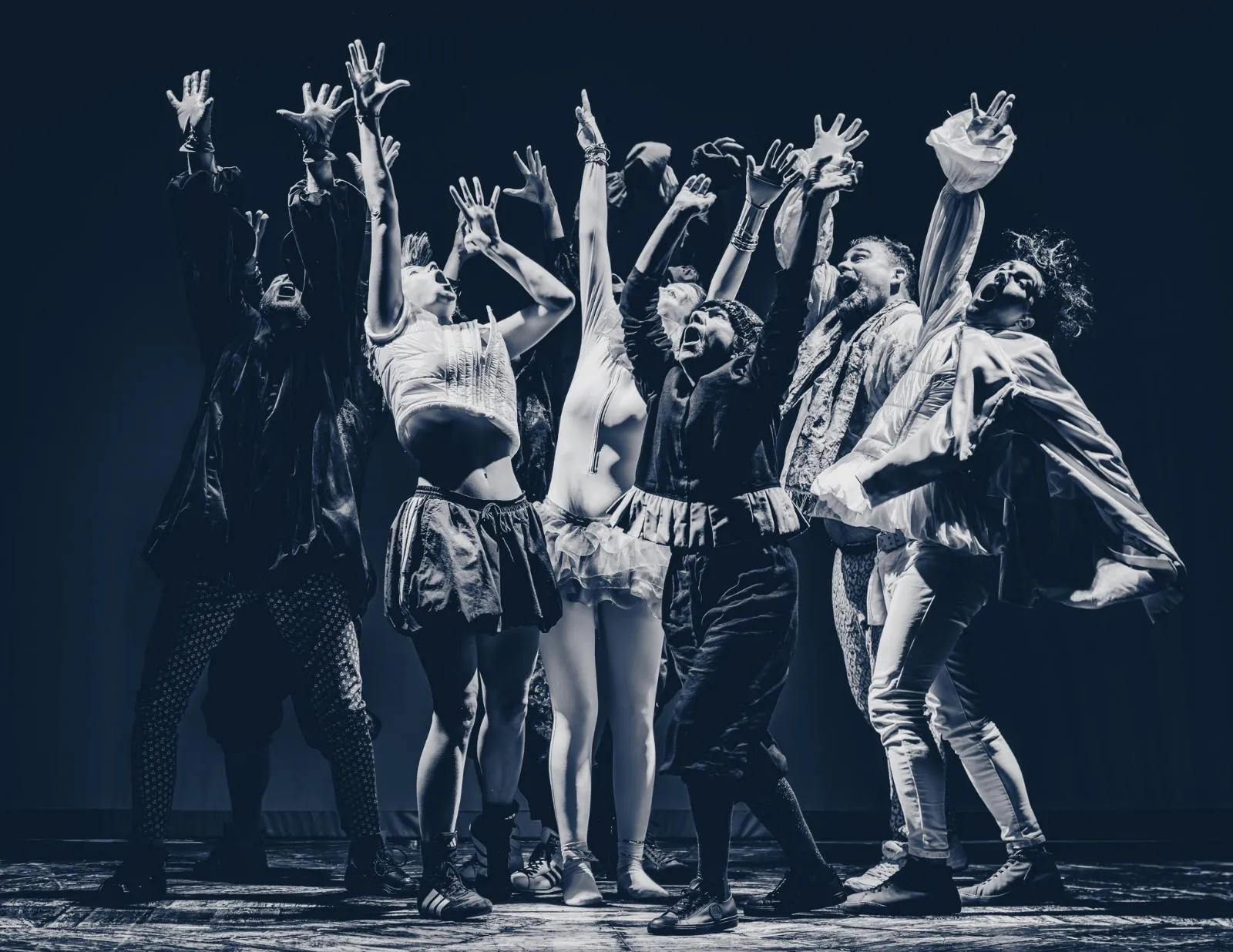
The Tempest, one of William Shakespeare’s most frequently staged plays, is a magical fable about power — its strength, the desire to influence others, and manipulation. It is also a story about the moment of relinquishing control, stepping back, and leaving. It can also be a reflection on what kind of ruler we need. Prospero reigns over an island cut off from the world. Living with him are his daughter Miranda, the depraved creature Caliban, and Ariel—a spirit. Prospero’s powers are limitless, and he draws his magical knowledge from the books he continually studies and explores. One day, as a result of his magic, shipwrecked sailors wash ashore on the island. Prospero seeks revenge on them for past events, when his brother treacherously stripped him of his throne and, believing he was sending him to certain death, banished him from the country along with his three-year-old daughter. The revenge Prospero exacts after twelve years is quite subtle. The castaways are scattered across the island, unaware of each other’s presence and convinced that the others are dead.
The audience members at the Gorzów performance, much like the castaways, are divided into groups and make their way through the various nooks and crannies of the island-theater. In each of these corners, we see scenes depicting coups and plans to seize power. Prospero has orchestrated a provocation to expose the pettiness and futility of human greed and folly. But what is Prospero striving for, and what role will his muse, Ariel, play? And what might happen if Prospero were to relinquish his power?
Juliusz Osterwa Theatre w Gorzow Wlkp, premiere 5. Sept. 2026, big stage - small stage - mirror room - foyer.
The performance teasers, done by Mikołaj Kwiatkowski:


